SK Hynix AI memory stock has moved from being a cyclical chip name to being treated by many investors as a direct AI infrastructure exposure. The reason is not vague “AI demand.” It is narrower and more measurable: high-bandwidth memory, or HBM, has become essential to advanced AI accelerators, and SK Hynix is reported to control more than half of that market while supplying into Nvidia’s ecosystem.
That makes SK Hynix different from a broad memory recovery story. In a conventional DRAM upcycle, investors mostly watch PC, smartphone, and server demand. In the current cycle, the sharper question is whether AI data-center spending keeps pulling scarce HBM capacity toward the most profitable customers. If it does, SK Hynix has a clearer claim on AI infrastructure economics than most memory makers have had in past cycles. If it does not, the old memory-cycle rules return quickly.
📊 The HBM number changed the debate
The most important figure in the current SK Hynix discussion is its reported share of the HBM market. The Motley Fool described SK Hynix as supplying 56% of the world’s AI memory chips. A separate 24/7 Wall St. summary reported SK Hynix at 58% of global HBM revenue. Those are secondary-source figures, not official company filing numbers, so they should be treated as reported estimates. Still, the message is consistent: SK Hynix is not merely participating in HBM. It is described as the category leader.
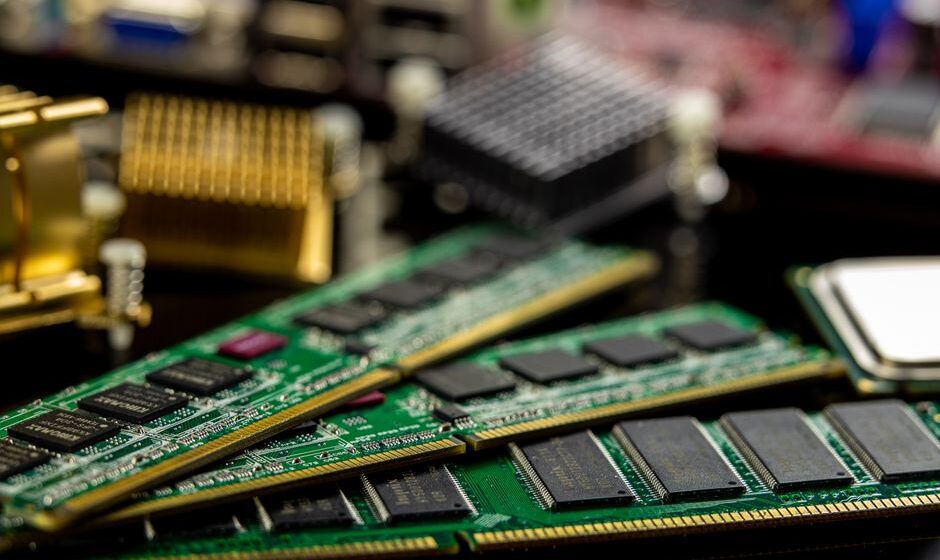
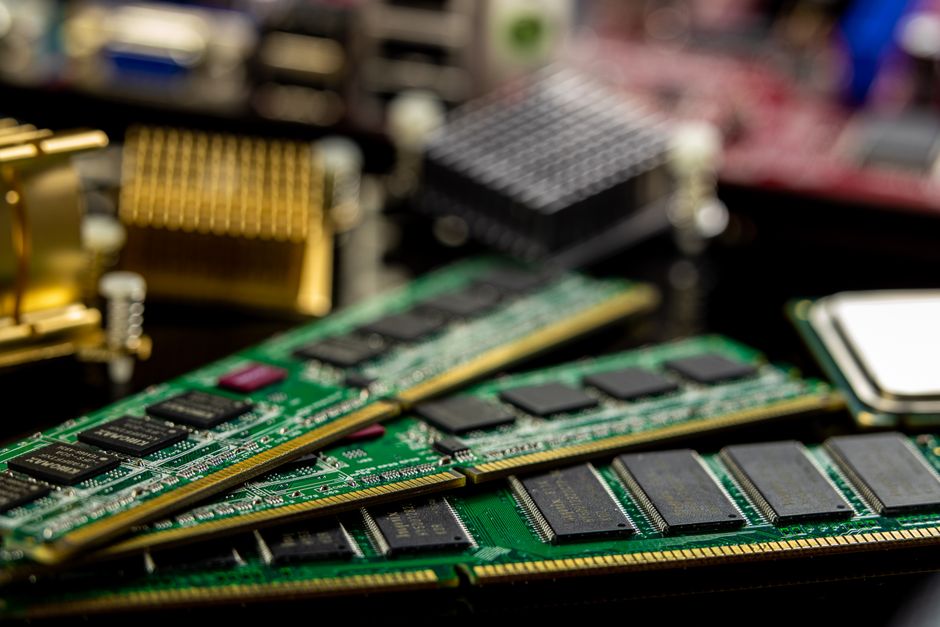
That matters because HBM is not interchangeable with ordinary commodity DRAM in the way investors sometimes talk about “memory.” HBM stacks memory dies vertically and connects them with very high bandwidth, allowing AI processors to move large models and training data faster. The accelerator gets the glamour, but memory bandwidth determines how much of that expensive compute can actually be used. In plain English: a data-center GPU without enough high-performance memory is like a race car waiting for fuel through a straw.
For investors, the difference is economic. Commodity DRAM has historically punished producers when supply runs ahead of demand. HBM, by contrast, is harder to manufacture, takes advanced packaging coordination, and is tied more directly to AI accelerator road maps. A company with leading HBM capacity can have more pricing power and customer visibility than a memory supplier selling into weaker end markets. That does not repeal cyclicality. It raises the quality of the current upcycle.
| Metric | Reported figure | Investor interpretation |
|---|---|---|
| SK Hynix share of AI memory chips | 56% | Suggests a dominant HBM position, according to a secondary source |
| SK Hynix share of global HBM revenue | 58% | Points to leadership by revenue, also reported by a secondary source |
| SK Hynix forward P/E after U.S. ADS debut | 10 | Priced above Micron on this summary’s estimate |
| Micron forward P/E cited for comparison | 6 | Shows investors are paying a higher multiple for SK Hynix exposure |
From memory supplier to Nvidia-linked infrastructure play
The second part of the thesis is customer connection. The Motley Fool summary says Nvidia signed a multiyear partnership with SK Hynix. The summary does not provide contract terms, volume commitments, or pricing, so investors should not pretend to know the exact economics. But the strategic meaning is still important: Nvidia’s AI servers depend on memory that can keep up with its accelerators, and SK Hynix is one of the suppliers positioned closest to that bottleneck.
This is why the market’s framing has shifted. Investors often want AI exposure without paying the full valuation attached to the most visible GPU leaders. SK Hynix offers a different route into the same capital-spending chain. When cloud providers and enterprises build AI clusters, they are not only buying processors. They are buying servers, networking, power systems, cooling, and memory. HBM sits inside that bill of materials at a critical point: without it, the processor’s throughput falls short of its theoretical promise.
The Nvidia link also changes how investors should interpret SK Hynix’s revenue quality. A memory company selling more into AI accelerators is still exposed to semiconductor cycles, but its demand driver is less tied to consumer electronics replacement rates. The key customer base becomes hyperscale data-center spending and AI model deployment. That can be powerful, because AI infrastructure budgets have been large and concentrated. It can also become dangerous if a handful of customers, product cycles, or platform decisions dominate orders.
💡 The U.S. revenue clue
The geographic mix reported by 24/7 Wall St. adds another layer. The summary says the U.S. accounted for about 65% of SK Hynix’s revenue in Q1 2026, and that Nvidia alone contributed 24% of total 2025 sales. Those figures are not presented here as filing-derived facts; they are secondary-source reported figures from 24/7 Wall St.. If accurate, they suggest SK Hynix’s business mix has tilted heavily toward U.S.-centered AI infrastructure demand.
That concentration cuts both ways. On the positive side, U.S. AI leaders have been among the deepest spenders in the current data-center buildout. A supplier attached to that spending can grow faster than a company waiting for a broad electronics recovery. On the negative side, customer concentration increases earnings sensitivity. If Nvidia changes its memory sourcing mix, if end customers pause deployments, or if export rules reshape where high-end AI systems can be sold, SK Hynix would not be insulated by being “just a memory company.” It would be exposed precisely because it is close to the AI buildout.
The concentration also helps explain why investors are paying attention to SK Hynix’s U.S. access. The Motley Fool summary notes that SK Hynix began offering American depositary shares at $149 per share on July 10. An ADS listing can make a foreign company easier for U.S. investors to access, screen, and compare. It does not change the underlying business. But when a company’s narrative is already tied to Nvidia and AI infrastructure, easier U.S. trading access can widen the investor base around that narrative.
🏭 HBM leadership has a supply-chain moat, not a magic shield
HBM leadership is hard-earned because it is a manufacturing and coordination challenge. It requires memory expertise, yield discipline, advanced packaging, and close alignment with accelerator road maps. That is why a large reported share can matter more in HBM than it would in a simpler commodity product. Customers want qualified supply. Switching is not frictionless when the memory must be validated with complex AI accelerators.
But investors should be careful with the word “moat.” Memory markets have a long history of periods when technical leadership produces excess returns, followed by periods when added capacity and weaker demand compress margins. HBM is structurally better than commodity DRAM today because AI demand is intense and supply is specialized. It is not structurally immune from competition. Samsung Electronics and Micron are not passive observers. If rivals improve yields, win qualifications, or add capacity faster than demand grows, SK Hynix’s reported share could decline even while the overall HBM market keeps expanding.
That distinction matters because a stock can be attached to the right theme and still disappoint if expectations outrun the earnings path. AI infrastructure is not a single endless order book. It is a capital cycle, and capital cycles invite supply responses. The better SK Hynix’s margins look, the stronger the incentive for competitors and customers to reduce dependence on one supplier.
📈 Valuation is already noticing
The valuation comparison in the Motley Fool summary is simple but useful. It says SK Hynix’s forward price-to-earnings ratio edged up to 10 after the U.S. debut, compared with Micron at 6. Forward P/E estimates are not hard accounting facts; they depend on analyst forecasts. Still, the spread tells us something about market expectations. Investors appear willing to pay more for SK Hynix’s HBM and Nvidia-linked exposure than for a peer with a lower cited multiple.
A 10 times forward earnings multiple may not sound demanding next to software or large AI platform stocks. Memory is different. Earnings at the top of a cycle can look deceptively cheap because profits are temporarily high. A low-looking multiple can expand the wrong way if earnings estimates fall. That is the classic trap in cyclical semiconductors: the stock looks inexpensive when margins are peaking and expensive when losses are near a bottom.
So the valuation question is not whether 10 times forward earnings is “high” in isolation. It is whether the “E” is durable enough. If HBM pricing, volume, and mix remain strong, the multiple can look reasonable. If AI orders normalize or if HBM supply catches up, the same valuation can become more fragile. The market is not only pricing SK Hynix as a memory maker. It is pricing the possibility that AI memory deserves a better multiple than commodity memory. That case has merit, but it must be tested quarter by quarter.
⚠️ The counter-scenario investors should take seriously
The bear case is not that AI disappears. A more realistic counter-scenario is that the AI infrastructure supply chain becomes less scarce. SK Hynix may still sell a great deal of HBM, but pricing could soften if competitors qualify more product, customers diversify supply, or data-center buyers pace their spending after a heavy buildout. In that environment, revenue can remain large while incremental margins disappoint. Semiconductor investors have seen that movie before.
Another risk is dependence on forecasts. The current discussion includes reported figures for market share, customer mix, and forward valuation. Those are useful, but they are not a substitute for official filings and company earnings materials. The strongest investor work here would verify reported revenue concentration, HBM mix, capital spending, inventory, and contract visibility against SK Hynix disclosures. Where the company does not disclose enough detail, the uncertainty itself belongs in the valuation.
There is also geopolitical and operational risk. SK Hynix is a Korean global chipmaker selling into a supply chain shaped by U.S. technology restrictions, China exposure, and customer-specific qualification cycles. AI chips and related components are politically sensitive. Rules can change faster than fabrication plants can be reconfigured. Investors do not need to forecast every policy move; they do need to recognize that AI infrastructure is now a strategic industry, not just a fast-growing product category.
SK Hynix AI memory stock, judged by evidence
The cleanest way to view SK Hynix is as a memory company whose best product line has become a gatekeeper for AI compute. That is a stronger thesis than simply saying the company is “benefiting from AI.” The reported 56% to 58% HBM share, the Nvidia partnership described by The Motley Fool, and the reported U.S. revenue concentration from 24/7 Wall St. all point in the same direction: SK Hynix is unusually close to the AI data-center spending cycle.
That closeness is exactly why the stock deserves more careful analysis, not less. A direct AI infrastructure link can lift growth, margins, and investor attention. It can also magnify downside if expectations become too clean. Memory remains cyclical. Customer concentration remains a real issue. Forward earnings multiples can flatter companies near the strongest part of a cycle.
For serious DIY investors, the practical test is whether future disclosures confirm that HBM strength is translating into durable earnings quality rather than a temporary pricing spike. The figures to watch are HBM mix, gross margin, capacity plans, inventory, customer concentration, and any official commentary on long-term supply agreements. If those indicators keep improving together, SK Hynix’s AI infrastructure identity becomes harder to dismiss. If they diverge, the old memory-stock discipline comes back into force.
That is the balanced case. SK Hynix has become one of the clearest listed plays on the memory bottleneck inside AI servers. It is also still a semiconductor stock in a capital-intensive, competitive, politically exposed industry. The opportunity and the risk come from the same place: the company is no longer sitting at the edge of the AI story. It is sitting much closer to the machinery.
This content is for general information only and is not a recommendation to buy or sell any security. Investment decisions are your responsibility.